
If you’ve been told you need a dental crown, you might be wondering:
“What exactly is a crown and which type is best for me?”
That’s a very common question and a smart one. A dental crown is not just a “cap” placed over a tooth. It’s a long-term solution that restores tooth strength, function, and appearance. Whether your tooth has a deep cavity, a crack, a root canal, or a cosmetic concern, crowns can help protect your smile and bring back comfort while chewing.
At Prakash Dental Care, we often meet patients searching online for the best clinic for Dental Crown & Bridges or wanting Crowns and Bridges Treatment in HSR Layout that feels comfortable, looks natural, and lasts long. This guide explains everything you need to know about types of crowns, the procedure, aftercare, and how to choose the right one.
What Is a Dental Crown?
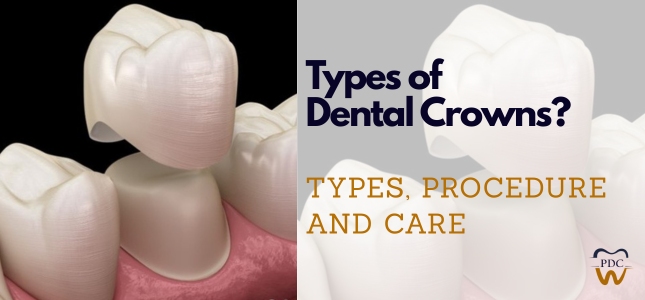
A dental crown is a tooth-shaped cover that is placed over a damaged, weak, or treated tooth. It helps by:
- Protecting the tooth from breaking
- Restoring chewing strength
- Improving appearance
- Supporting long-term dental health
Think of a dental crown as a protective shield that makes your tooth strong and functional again.
Crowns are commonly recommended after:
- Root canal treatment
- Large fillings
- Cracked or broken teeth
- Severe tooth wear
- Cosmetic smile improvement
Types of Dental Crowns (Most Common Options)
There isn’t one “best crown” for everyone. The right crown depends on your tooth condition, location (front or back teeth), bite pressure, and aesthetic needs.
Here are the most common crown types used in modern dentistry:
1) Metal Crowns (Gold or Alloy Crowns)
Metal crowns are made from gold or metal alloys. Dentists often recommend them for back teeth because they are extremely durable.
Benefits
- Very strong and long-lasting
- Rarely break or chip
- Good for heavy chewing forces
Disadvantages
- Metallic appearance (not cosmetic)
- Mostly used for molars
2) Porcelain-Fused-to-Metal Crowns (PFM Crowns)
PFM crowns combine a metal base for strength with porcelain coating for a tooth-like appearance.
Benefits
- Strong and reliable
- Looks natural compared to full metal
- Suitable for front and back teeth
Disadvantages
- Porcelain can chip in some case
- May show a dark line near gums over time
3) All-Ceramic / All-Porcelain Crowns
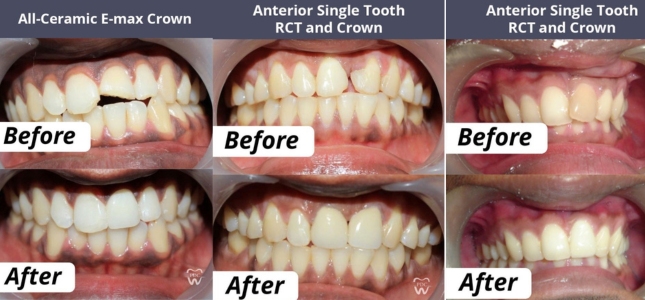
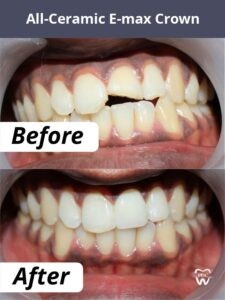
All-ceramic crowns offer one of the best aesthetic results, which makes them ideal for visible front teeth.
Benefits
- Looks most natural
- Best for cosmetic improvement
- No metal line near gums
Disadvantages
- May not be ideal for very heavy bite pressure (depending on case)
Patients looking for cosmetic-friendly solutions often ask our Dental Crown and Bridges specialist about this option.
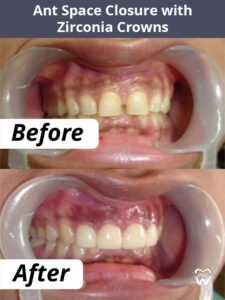
4) Zirconia Crowns (Strong + Natural-Looking)
Zirconia crowns are one of the most popular crown types today because they offer both strength and aesthetics.
Benefits
- Extremely strong and durable
- Looks natural
- Works well for both front and back teeth
- Biocompatible (gum-friendly)
Disadvantages
- Requires precise planning for best fit
If you want a long-lasting solution with a natural look, zirconia crowns are often an excellent choice in many cases.
5) E-Max Crowns (Best for Aesthetic Front Teeth)
E-Max crowns are made from lithium disilicate ceramic. They are known for their premium appearance and natural translucency.
Benefits
- Beautiful natural appearance
- Great for front teeth
- Stronger than basic porcelain crowns
Disadvantages
- Usually recommended where aesthetics matter most
What Is a Dental Bridge? (When Crowns Replace Missing Teeth)
A dental bridge is used when one or more teeth are missing. It “bridges the gap” by using the neighbouring teeth as support.
A bridge includes:
- Crowns on supporting teeth (abutments)
- A false tooth in the middle (pontic)
This is why crowns and bridges often go together in treatment planning.
If you are searching for Crowns and Bridges Treatment in HSR Layout, it usually means you want to restore both tooth strength and missing teeth function with long-term stability.
Crowns Procedure: Step-by-Step
Many people feel nervous because they don’t know what happens during crown treatment. Here’s the process explained in a simple way.
Step 1: Consultation & Tooth Evaluation
Your dentist examines your tooth and may take an X-ray. This helps confirm if the tooth needs a crown or another treatment.
Step 2: Tooth Preparation
The dentist gently reshapes the tooth to make space for the crown. If there is deep damage, buildup may be required.
Step 3: Impression / Digital Scanning
We take a scan or impression to design a crown that fits perfectly.
Step 4: Temporary Crown
A temporary crown is placed to protect the tooth until your final crown is ready.
Step 5: Crown Fixing (Final Placement)
Once the final crown is ready, the dentist checks the fit, bite, and shade, then fixes it using strong dental cement.
At Prakash Dental Care, our team includes an Advanced Dental Crown & Bridges specialist who focuses on comfort, precision, and natural finishing.
How Long Do Dental Crowns Last?
With proper care, dental crowns can last for many years.
The lifespan depends on:
- Crown material
- Bite pressure and habits (grinding/clenching)
- Oral hygiene
- Regular dental check-ups
Good habits and professional monitoring greatly extend crown life.
Dental Crown Aftercare: How to Maintain Your Crown
Crowns don’t need complicated care, but they do need good daily habits.
Do This
- Brush twice daily
- Floss daily (especially around the crown edges)
- Use mouthwash if recommended
- Visit the dentist for routine check-ups
- Eat carefully for the first 24 hours after fixing
Avoid This
- Biting ice or very hard foods
- Using teeth to open packets
- Ignoring gum bleeding around the crown
- Skipping dental cleaning appointments
Crowns protect your tooth, but gum health around the crown matters just as much.
Dental Crown and Bridges Cost: What Affects It?
Patients often ask about dental crown and bridges costs. Instead of focusing only on a low-cost option, it’s better to understand what affects the cost, such as:
- Type of crown material
- Tooth location (front or back)
- Need for root canal or buildup
- Bridge length (if multiple teeth are missing)
- Bite adjustment and complexity
A proper consultation helps you choose the right crown based on your needs and long-term durability.
Why Choose Prakash Dental Care for Crowns & Bridges Treatment in HSR Layout?
Patients choose us because we provide:
- Accurate diagnosis and treatment planning
- Natural-looking crown design
- Comfortable procedures with modern techniques
- rusted team with crown and bridge expertise
- Long-lasting solutions with proper aftercare guidance
If you are looking for the best clinic for Dental Crown & Bridges, our goal is to provide treatment that looks good, feels comfortable, and lasts long.
Frequently Asked Questions
1. Which type of dental crown is best?
The best crown depends on your tooth condition and location. Zirconia and ceramic crowns are popular for natural look and long-term strength.
2. Is getting a dental crown painful?
No. The procedure is done under local anesthesia, so it’s comfortable. You may feel mild sensitivity afterward, which settles quickly.
3. How long does it take to get a crown?
Most crown treatments take 2 visits one for preparation and one for final fixing. Some cases may vary based on complexity.
4. Can a crown come off or loosen?
Yes, it can happen due to sticky foods, decay, or cement wear. If your crown feels loose, visit your dentist immediately.
5. Do crowns look like natural teeth?
Yes. Modern crowns are designed to match your tooth colour, shape, and size, so they blend naturally with your smile.
6. What is the difference between a crown and a bridge?
A crown covers a damaged tooth, while a bridge replaces one or more missing teeth using crowns as support on nearby teeth.
7. Where can I get Crowns and Bridges Treatment in HSR Layout?
You can visit Prakash Dental Care for expert evaluation and treatment planned by an experienced Dental Crown and Bridges specialist.